
The Syncretic Sense
4 April – 24 May 2009
Plymouth Arts Centre
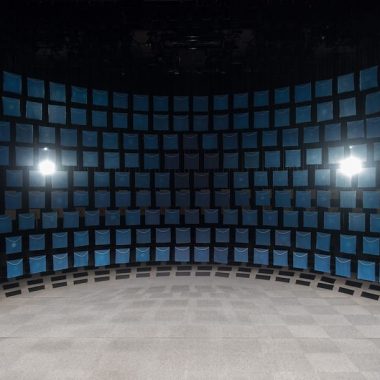
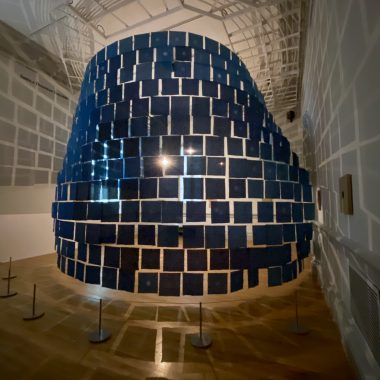
The first UK retrospective exhibition of the pioneering cybernetic artist Roy Ascott, curated in collaboration with i-DAT (Institute for Digital Art and Technology, University of Plymouth).
Long before email and the internet, Roy Ascott started using online computer networks as an art medium and coined the term [...]
Tags:
interactive media,
Planetary Collegium,
Research
Look Mom! Wordpress! This represents the first major design overhaul of x-tet.com since 2003. Sure, I still like Japanese action figures, but a revised look and structure for this site was long overdue… Thank you Upstart Blogger for the very cool Minim theme—it’s just what I wanted.
Converting an existing web site to a blog may [...]
Tags:
current works,
interactive media
Asynchronous improvisation by me, you + others. Following Perturb, Sound Garden is the second work in a series of musical installations that explore the relationship of people, location, and audio relative to technology. Sound Garden was composed for Arts Week 2007 at Indiana University, Bloomington. The project originally ran from 21 February to 7 March, [...]
Tags:
Amergent music,
Flash,
Generative music,
Max/MSP
A musical exploration of space, with reference to Henri Bergson, Guy Debord, Kevin Lynch, and Henri Lefebvre. These studies require the arrow keys of a standard computer keyboard and the Flash player.
Launch first study: Dérive
Launch second study: Mazes
This research has taken me to some unexpected and very interesting places. “Psychogeography” in the writings of Guy [...]
Tags:
Amergent music,
Flash,
interactive media,
Research
An asynchronous improvisation by me, you + others at the SoFA gallery in Bloomington, IN. Sound material is to be provided by those who vist the piece. Join in the performance with your own short recordings, samples, soundscapes, and found sonic objects.
Launch Perturb project site
Tags:
Amergent music,
Flash,
Generative music,
Max/MSP
A(rt)Life 2.0 is an installation of music, sound, and projected animation. It uses a flocking behavior to reveal the possibilities of sound in Artificial Life systems. A(rt)Life 2.0 examines the relationship of music and emergence by exploring how self-organizing behavior can extend music endlessly in time.
Launch A(rt)Life 2.0 project site
Tags:
artificial life,
Generative music,
Max/MSP
A(rt)Life is a new project, initiated Summer 2005. This study uses the PSO algorithm and explores the connection between swarm dynamics and specific parameters of a music composition. Unlike my other PSO-related works this example is only available as an MP3.
Launch max.s.o.mp3
Tags:
artificial life,
Flash,
Max/MSP
Automatic Body, done in collaboration with Yacov Sharir, is an installation driven by swarm dynamics where individual behaviors are translated into sound and dance. The media has not been optimized for the web, so please excuse the sluggish playback.
Launch AUTOMATIC BODY
Tags:
collaboration,
Flash,
Generative music
Complexity via simplicity: This piece uses the particle swarm algorithm of Kennedy and Eberhart to make generative music. PSO[2] was premiered at the Red Gate Gallery in Beijing, China in conjunction with “Consciousness Reframed 2004: Qi & Complexity.”
Launch PSO[2]
Tags:
Flash,
Generative music
This project is based on the cut-up techniques used by Brion Gysin and William S. Burroughs. Burroughs gave a lecture where he discussed his and Gysin’s experiments with cut ups at the Jack Kerouac School of Disembodied Poetics in April of 1976. This piece takes that lecture and cuts it into an ever-changing variety of [...]
Tags:
Burroughs,
Flash,
Generative music